·ClaudeSkill SEO platform·20 min read
What Is a Claude SEO Tool? Claude SEO Analysis Software and Tracking (2026)
86% of SEO pros use AI in their workflow. See how Claude SEO tools deliver 7-category audits, AI search readiness, and week-over-week tracking in 2026.
Former enterprise SEO program lead; Google Analytics Individual Qualification; practitioner certifications in JavaScript rendering, crawl diagnostics, and Core Web Vitals field methodology.
Related guides in this series
- What is ClaudeSkillSEO?
- How to run an AI SEO audit without the terminal
- What is a GEO / AI search audit?
- Claude SEO skill CLI vs web interface
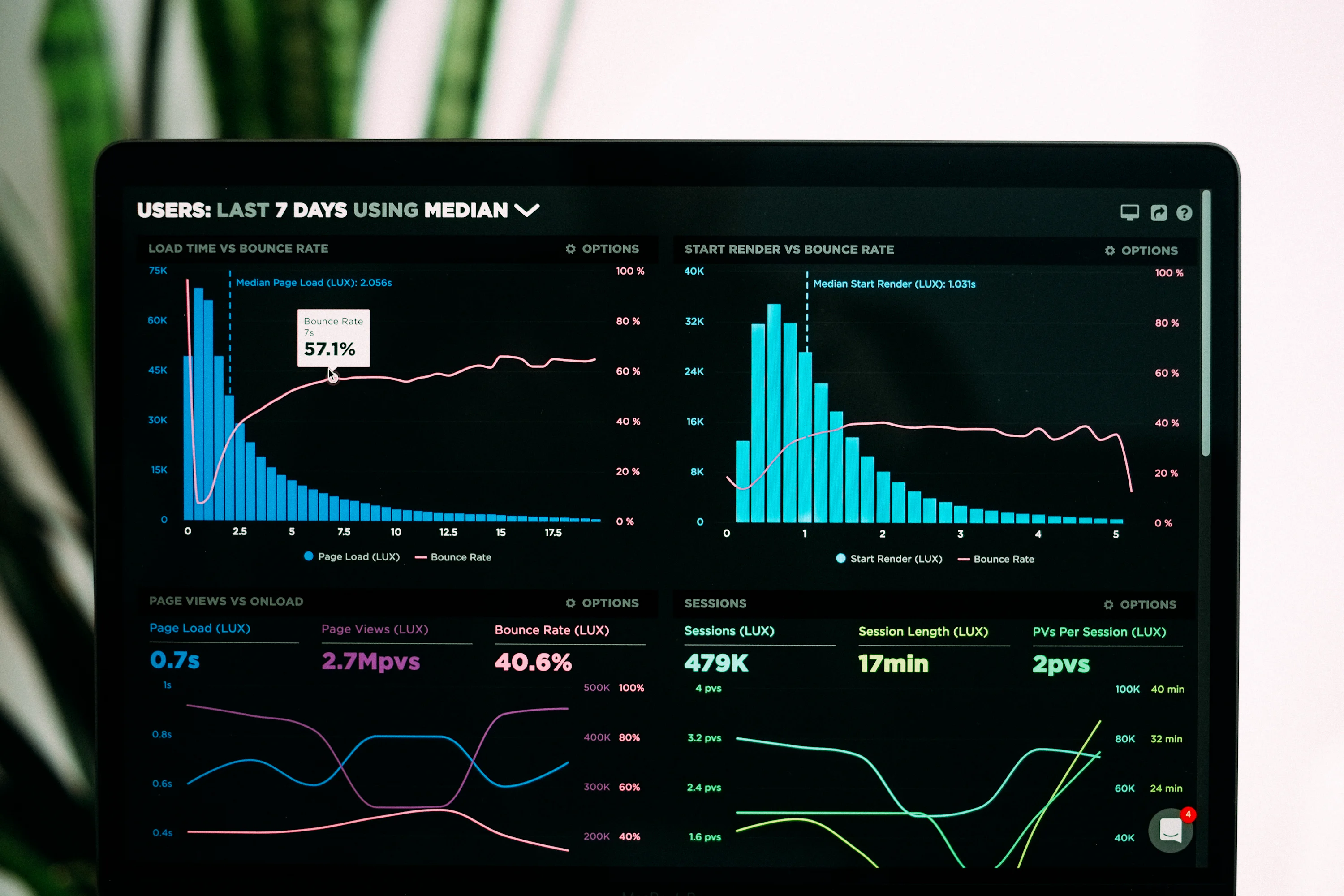
title: "What Is a Claude SEO Tool? Complete Guide to Claude SEO Analysis Software and Tracking in 2026" description: "86% of SEO pros use AI in their workflow. See how Claude SEO tools deliver 7-category audits, AI search readiness, and weekly rank tracking in 2026." coverImage: "https://images.unsplash.com/photo-1551288049-bebda4e38f71?fm=jpg&q=60&w=3000&auto=format&fit=crop&ixlib=rb-4.1.0" coverImageAlt: "Performance analytics graphs displayed on a laptop screen showing SEO data trends and insights" ogImage: "https://images.unsplash.com/photo-1551288049-bebda4e38f71?fm=jpg&q=60&w=3000&auto=format&fit=crop&ixlib=rb-4.1.0" date: "2026-05-26" lastUpdated: "2026-05-26" author: "ClaudeSkill SEO" tags: ["claude seo tool", "claude seo analysis software", "claude seo tracking tool", "ai seo", "seo automation", "ai search readiness"]
What Is a Claude SEO Tool? Complete Guide to Claude SEO Analysis Software and Tracking in 2026
Eighty-six percent of SEO professionals now use AI in their workflow—up from 65% just one year ago (Aira State of SEO Report, 2025). Yet most teams are still cobbling together ad-hoc prompts in a general-purpose chatbot rather than using purpose-built Claude SEO tools that combine structured audits, multi-category analysis, and ongoing rank tracking. There's a real gap between "I asked Claude something about my site" and "I run a systematic Claude SEO analysis every two weeks and track improvement over time."
This guide closes that gap. You'll learn what Claude SEO analysis software actually does under the hood, how Claude-powered tracking tools monitor your site's health across weeks and months, and how platforms like ClaudeSkill SEO make this level of analysis accessible to any marketer—no terminal, no API keys, no setup.
Key Takeaways
- 86% of SEO professionals now use AI in their workflow, yet most lack a systematic Claude SEO analysis process (Aira, 2025)
- Claude SEO analysis software audits 7 scoring categories, including AI search readiness checks that traditional tools skip entirely
- The AI-powered SEO market is projected to grow from $3.98B in 2025 to $32.6B by 2035 (Market.us, 2025)
- One documented Claude Code SEO workflow identified 2,742 wasted-spend search terms in roughly 90 seconds (Search Engine Land, 2026)
Related: Why agentic SEO beats static scorecards compares AI audit workflows to traditional dashboards.
What Is a Claude SEO Tool, and Why Does It Matter in 2026?
The AI-powered SEO software market reached $3.98 billion in 2025 and is forecast to hit $32.6 billion by 2035—a 23.4% compound annual growth rate (Market.us, 2025). Behind that growth is a genuine shift in complexity: SEO now demands analysis across both traditional ranking signals and how your content surfaces inside AI-generated answers on Google, ChatGPT, and Perplexity.
A Claude SEO tool is a platform that uses Anthropic's Claude AI model to run structured, repeatable SEO audits across every major dimension of site health. Unlike pasting a URL into a chatbot and parsing its response, a purpose-built Claude SEO tool:
- Crawls your actual page content and on-page signals
- Scores results systematically across consistent categories every run
- Identifies issues in priority order—critical blockers first, cosmetic issues last
- Checks AI-specific signals like
llms.txtcompliance, AI crawler accessibility, and passage-level citation readiness - Tracks scores over time so you can verify that fixes actually moved the needle
The distinction matters in practice. A chatbot gives you a paragraph of impressions based on what you describe. A dedicated Claude SEO analysis tool gives you a scored, reproducible report with specific findings—the same leverage a code-review tool provides over pasting code into a chat window.

Related: What is a GEO / AI search audit? and GEO structuring for citation.
How Claude SEO Analysis Software Audits Your Site
According to a 2025 Conductor survey of more than 350 practitioners, 78% of enterprise SEO teams already use AI for keyword research—but only a fraction run comprehensive multi-category audits that cover technical, content, and AI-specific signals simultaneously (Conductor State of Organic Marketing, 2025). That gap is where dedicated Claude SEO analysis software earns its keep.
ClaudeSkill SEO runs a seven-category health audit covering every layer of modern SEO:
- Content Quality — Readability, topical depth, E-E-A-T signals, and factual accuracy
- Technical SEO — Crawlability, indexability, redirect chains, canonical tag implementation
- On-Page Signals — Title tags, meta descriptions, heading hierarchy, keyword placement
- Schema Markup — Presence and validity of structured data (JSON-LD) for rich results
- Performance / Core Web Vitals — LCP, INP, CLS measured against real field data
- AI Search Readiness —
llms.txtconfiguration, AI crawler permissions, passage citability - Image Optimization — Alt text coverage, file size, format (WebP vs. JPEG), lazy loading
Each category receives its own score, and the platform separates critical issues (things that block crawling or rankings) from high-priority improvements and lower-impact polish. You don't wade through a flat 47-item list—you see what to fix first.
Worth noting: Traditional SEO tools handle 6 of these 7 categories reasonably well. Category 6—AI Search Readiness—is where legacy platforms return blank or placeholder data. It wasn't a ranking factor two years ago, so they never built for it. Claude-powered analysis tools have this category built natively, which is the single clearest structural advantage they hold.
Related: Why agentic SEO beats static scorecards on scaling SEO operations with AI.
What Does "AI Search Readiness" Mean in a Claude SEO Tool?
AI search readiness checks are the fastest-growing differentiator in SEO analysis software, and the data explains why: 60% of traditional search queries now return zero clicks because AI Overviews answer the question directly on the results page (Bain & Company, 2025). And when an AI summary does appear, only 8% of users click any traditional link below it (Pew Research, 2025). Appearing inside the AI-generated answer is no longer a nice-to-have—it's the primary traffic channel for an increasing share of queries.
AI search traffic itself grew 527% year-over-year in 2025, with LLM-referred sessions rising from roughly 17,000 to 107,000 in a single calendar comparison period (Previsible AI Traffic Report, 2025). That trajectory isn't slowing.
ClaudeSkill SEO's AI search readiness audit checks four specific things traditional tools miss:
llms.txtconfiguration — Whether you've specified which pages AI bots should use as sources- AI crawler permissions — Whether Anthropic's ClaudeBot, GPTBot, and PerplexityBot are allowed in
robots.txt - Passage-level citability — Whether content is structured into self-contained, 40-60 word paragraphs that AI systems can extract verbatim
- Answer-first formatting — Whether key sections open with a direct, fact-dense statement rather than a slow warm-up
According to a 2025 Ahrefs study, 87% of marketers now use AI to help create content, and teams using AI publish a median of 42% more articles per month (17 vs. 12 without AI support) (Ahrefs, 2025). More content published means AI search readiness becomes proportionally more important—every new page needs to be configured to win citations, not just traffic.

Related: GEO for AI Overviews: structuring pages worth citing.
Claude SEO Tracking Tool: How to Monitor Site Health Over Time
A single audit is a snapshot. Real SEO improvement requires a feedback loop—and 87% of marketers using AI for content publish significantly more per month, meaning there's more to track, not less (Ahrefs, 2025). A dedicated Claude SEO tracking tool converts one-time audits into a running performance record so you can see whether your fixes are working or whether new issues are emerging.
ClaudeSkill SEO saves every completed audit to your account history. Re-running the same site a week or two later doesn't produce a separate orphaned report—it produces a delta. The platform shows you: "Your overall score improved +12% from last week," broken down by category so you know which of the seven dimensions moved.
The standard tracking workflow looks like this:
Week 1 — Baseline audit. Run your first complete audit. The seven-category score becomes your starting benchmark. Note the critical and high-priority findings.
Weeks 2-3 — Fix critical issues. Address crawl blocks, missing canonical tags, broken schema, and AI crawler permission errors first. These carry the highest score impact.
Week 4 — Re-audit. The platform compares the new score against your stored baseline. Category-by-category deltas show exactly where improvement registered—and where it didn't.
Ongoing — Trend monitoring. Sustained score improvement across technical SEO, AI readiness, and schema categories correlates with stronger organic and AI-search performance over the following 4-8 weeks.
Export on demand. PDF reports for client presentations. Markdown exports for documentation systems or version control.
The audit history feature is particularly useful when managing multiple client sites. Instead of maintaining a manual spreadsheet tracking last month's score for each domain, the tracking tool handles the recordkeeping. You stay focused on fixes rather than administration.
ClaudeSkill SEO: Claude-Powered Analysis Without the Command Line
Not every SEO practitioner wants to configure a local environment or manage API credentials. ClaudeSkill SEO was built specifically to make the full analytical power of Claude-based SEO auditing available through a web dashboard—no terminal, no Claude Code CLI, no local setup required.
The workflow is three steps: enter a URL, choose your audit scope, get a prioritized report. Behind the interface, the platform runs the same structured analysis that developers configure manually with the open-source Claude Code SEO skill—then presents findings sorted by severity and category so you know exactly where to start.
What the interface delivers:
- Prioritized issue list organized as critical / high / medium / low
- Score breakdown across all 7 audit categories
- Week-over-week delta compared to your stored audit history
- PDF export for client reporting, Markdown export for documentation
Pricing:
- New accounts receive $20 in AI credits—enough for a complete audit on a small-to-medium site
- $0.005 per second of active AI analysis (pay-as-you-go, no monthly subscription required)
- Credits never expire—useful for agencies with irregular audit schedules
- Failed runs don't consume credits—you pay only when an audit completes successfully
That last point is worth underscoring. Most per-token AI tools charge regardless of whether the output was useful. For audit workloads where network issues, robots.txt blocks, or site timeouts can interrupt a run, success-based billing is a meaningful cost protection.
A structural difference: Success-based billing (failed = $0) is genuinely uncommon in AI SaaS pricing. It shifts the risk of technical failure from the customer to the platform—an important consideration for agencies billing audit services to clients, where eating a failed-run cost from your own budget adds up over time.

Related: How to run an AI SEO audit without the terminal covers exports and client handoffs.
What Results Can You Expect from Claude SEO Analysis?
Nearly 70% of businesses report higher ROI after incorporating AI into SEO and content workflows (Semrush, November 2025). The gains aren't abstract—they show up in specific, measurable workflow metrics.
The clearest published example comes from Search Engine Land: a practitioner using Claude Code for SEO analysis identified 2,742 wasted-spend search terms in approximately 90 seconds—work that previously required "most of an afternoon" manually (Search Engine Land, March 2026). That's the same analytical engine running inside ClaudeSkill SEO's audit system.
Teams that adopt structured Claude SEO analysis consistently report three categories of gains:
Speed. AI reduces time spent on keyword research by up to 80% and content optimization effort by roughly 30% (marketingltb.com, 2025). With structured audit tooling, that speed gain extends to technical issue discovery and AI readiness checks.
Volume. Teams using AI tools publish a median 17 articles per month vs. 12 for non-AI teams—a 42% increase (Ahrefs, 2025). More content published means audit frequency and tracking become proportionally more valuable.
Compounding improvement. Systematic re-auditing creates a feedback loop: fix issues, re-score, verify the delta. One-time spot-checks don't do this—tracking tools do.
ClaudeSkill SEO's own platform data shows a sample site reaching a 98/100 health score with a +12% week-over-week improvement—demonstrating that tracked, iterative auditing drives compounding gains rather than one-off fixes that fade from view.
Related: Why agentic SEO beats static scorecards.
How to Run Your First Claude SEO Analysis (Step-by-Step)
Getting your first structured audit done is faster than you'd expect. Here's the exact process with ClaudeSkill SEO:
Step 1 — Create your account. Sign up and your account is credited with $20 in AI credits. That's enough to run a full audit on a small-to-medium site before you spend anything.
Step 2 — Enter your target URL. Paste in the URL you want analyzed—your homepage, a key landing page, or a specific blog post. You can scope the audit to a single page or expand it to crawl a broader section of your site.
Step 3 — Select your audit scope. Choose how deep to go. A single-page audit takes a few minutes. A multi-page crawl takes longer but delivers the full picture across all 7 scoring categories.
Step 4 — Review prioritized findings. Your results arrive organized as critical → high → medium → low. Start at the top. Every finding includes an explanation of the issue, why it matters for rankings or AI visibility, and what to do about it.
Step 5 — Export the report. Download PDF for client-facing presentations. Download Markdown for your documentation system or to paste into a project management tool.
Step 6 — Fix and re-audit. Resolve the critical and high-priority items, then run a second audit. The platform compares it to your baseline and surfaces the delta so you can confirm improvements registered.
The first audit-to-action cycle—from account creation to a prioritized action list—takes under 30 minutes for most sites.
Why a Dedicated Claude SEO Tool Outperforms a Generic Chatbot for SEO
The most common objection sounds reasonable: "Can't I just paste my page into Claude and ask what's wrong?" You can—but there are real ceilings.
When you run Claude manually as a chatbot for SEO analysis, you get responses based on what you describe, not what's actually on the page. There's no crawl of your real site structure, no access to Core Web Vitals field data, no audit history to compare against, and no consistent scoring across the same categories every time.
A dedicated Claude SEO analysis tool like ClaudeSkill SEO runs Claude against your actual content and technical signals—real on-page data, real schema, real performance metrics—then produces a reproducible, scored report. According to the Search Engine Land case study from March 2026, the power comes from pairing Claude's reasoning with structured access to your real SEO data (page content, crawl signals, performance data), not from Claude in isolation (Search Engine Land, 2026).
Claude is currently used by roughly 10% of marketers for content-related tasks, ranking third behind ChatGPT at 44% and Gemini at 15% (Ahrefs, 2025). What separates teams getting structured, compounding value from those using it sporadically is exactly this: a systematic workflow with real data and repeatable scoring, not a prompt-and-hope approach.

Related: Claude SEO skill CLI vs ClaudeSkillSEO web interface.
Claude SEO Tool vs. Traditional SEO Software: What's Different?
Which gaps does a Claude SEO tool actually fill that traditional platforms don't? Here's a direct comparison across the dimensions that matter most in 2026:
| Dimension | Traditional SEO Tool | Claude SEO Tool |
|---|---|---|
| Keyword rank tracking (scale) | Strong — millions of keywords | Limited to audit-scope queries |
| Technical SEO audit | Strong | Strong |
| Content quality scoring | Basic word-count checks | Structured E-E-A-T and readability analysis |
| Schema validation | Varies by platform | Built-in JSON-LD validation |
| AI search readiness | Rarely available | Core audit category |
llms.txt compliance check | Almost never | Standard check |
| AI crawler accessibility | Rarely available | Standard check |
| Passage-level citability | Not available | Built-in |
| Audit history / delta tracking | Common | Built-in with week-over-week delta |
| Pricing model | Monthly subscription ($50–$500+/mo) | Pay-as-you-go ($0.005/sec) |
The complementary view is accurate: a traditional rank tracker handles large-scale keyword monitoring and backlink databases better than any audit tool. A Claude SEO analysis tool handles AI search readiness and structured content scoring better than any rank tracker. Used together, they cover the full 2026 SEO landscape.
Related: Claude SEO skill CLI vs web interface and What is ClaudeSkillSEO?.
Frequently Asked Questions About Claude SEO Tools
What does a Claude SEO tool actually analyze?
A Claude SEO tool audits both traditional and AI-specific signals across 7 categories: content quality, technical SEO, on-page elements, schema markup, Core Web Vitals, AI search readiness, and image optimization. ClaudeSkill SEO surfaces critical issues first. Enterprise teams report 78% AI adoption for keyword research alone (Conductor, 2025), but comprehensive multi-category auditing remains significantly underpenetrated.
Related: Technical SEO crawl budget and JavaScript rendering for crawl-depth coverage.
Is Claude SEO analysis software better than traditional SEO tools?
Claude SEO analysis software covers AI search readiness—llms.txt compliance, AI crawler access, passage citability—that traditional tools mostly skip. Where traditional platforms excel is large-scale keyword rank tracking and backlink databases. The two categories are complementary: nearly 70% of businesses report positive ROI from AI-augmented SEO workflows (Semrush, November 2025), suggesting that adding Claude-powered analysis on top of existing tools drives incremental gains.
How does a Claude SEO tracking tool monitor progress over time?
ClaudeSkill SEO stores every completed audit in your account history. When you re-run an audit on the same URL, the platform automatically compares the new score to your stored baseline and shows the category-by-category delta—for example, "+12% from last week." No manual comparison is needed. AI-referred search traffic grew 527% year-over-year in 2025 (Previsible, 2025), making regular tracking increasingly important for visibility.
How much does Claude SEO analysis cost?
ClaudeSkill SEO charges $0.005 per second of active AI analysis, with $20 in free credits for new accounts. Failed runs don't consume credits, and credits never expire. There's no monthly subscription—you pay only when an audit completes successfully. For agencies running irregular audits across multiple client sites, the pay-as-you-go model is considerably more cost-efficient than a flat monthly fee sized for daily use.
Can a Claude SEO tool replace an SEO agency?
A Claude SEO tool automates the analysis and issue-identification layer, not the strategy, outreach, and relationship layers. What it does replace is the manual audit work that previously consumed most of an SEO team's time. One documented Claude Code SEO workflow identified 2,742 wasted-spend search terms in roughly 90 seconds versus "most of an afternoon" of manual analysis (Search Engine Land, 2026). The hours freed up are better spent on content strategy, link acquisition, and client communication—not spreadsheet wrangling.
Conclusion
The question isn't whether to use a Claude SEO tool—86% of SEO professionals already have AI in their workflow, and that number is accelerating faster than any prior year. The question is whether you're using it systematically or just ad hoc.
A structured Claude SEO analysis tool like ClaudeSkill SEO gives you reproducible audits across all 7 scoring categories, including the AI search readiness checks that no traditional tool covers. The tracking layer converts isolated snapshots into a running performance record. And the web interface means your whole team benefits from Claude-level analysis—not just the practitioners comfortable with a command line.
Start with the free trial. Run your first audit. Fix the critical findings. Re-audit in two weeks. That feedback loop, repeated consistently, is how sites go from good scores to exceptional ones.
Next step: How to run an AI SEO audit without the terminal.
Last updated: May 2026
Related readingTopic cluster · ClaudeSkill SEO platform
- Claude SEO Skill Web Interface: What Is ClaudeSkillSEO.com?The Claude SEO skill web interface (ClaudeSkillSEO.com) runs SEO audits in your browser, no terminal needed. Based on the open-source GitHub skill by Agrici Daniel.
- How to run an AI SEO audit without the terminalStep-by-step ClaudeSkillSEO.com workflow: sign in, pick an audit command, enter a URL, read History and Full Report, and export artifacts—no Claude Code install.
- What is a GEO / AI search audit?Generative engine optimization audits measure citability for AI Overviews and assistants. How the Claude SEO skill GEO module works on ClaudeSkillSEO.com.
- Claude SEO skill CLI vs ClaudeSkillSEO web interfaceCompare running the open-source Claude SEO skill in Claude Code versus ClaudeSkillSEO.com: setup, artifacts, billing, History, and who maintains each layer.
- Why agentic SEO beats static scorecardsHow Claude-driven audits turn crawl output into executable fixes, GEO-ready passages, and artifacts—not another dashboard you interpret alone.
Explore ClaudeSkill SEO
This blog is the editorial hub for methodology; product pages cover how skills run in production—from scheduled audits to billable runtime.